|
詳細情報 |
|||
| ヒートシンクの材質: | アルミニウム | 表面仕上げ: | ミル仕上げまたは陽極酸化処理 |
|---|---|---|---|
| 材料: | 銅・アルミニウム | ファンライフ: | 100000 時間 |
| 深いプロセス: | CNC加工 | 伝導力: | 2000W |
| 許容範囲: | ±1% | 追加処理: | CNC加工 |
| 精度: | ±0.002 ~ ±0.005mm | 最大圧力: | 5バー |
| 重さ: | -40℃~120℃ | 素材の質感: | 6061 |
| ハイライト: | Radiator-integrated liquid cooling plate,Liquid cooling plate with heat dissipation fins,High-performance liquid cooling radiator plate |
||
製品の説明
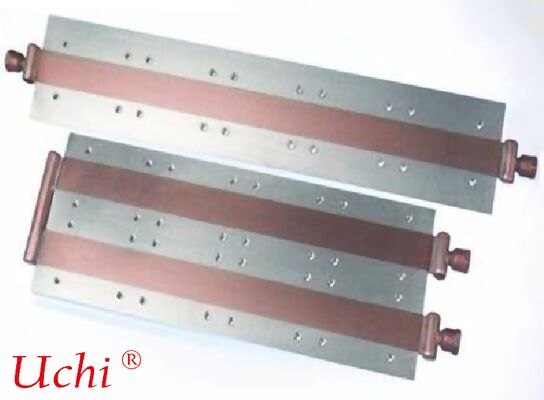
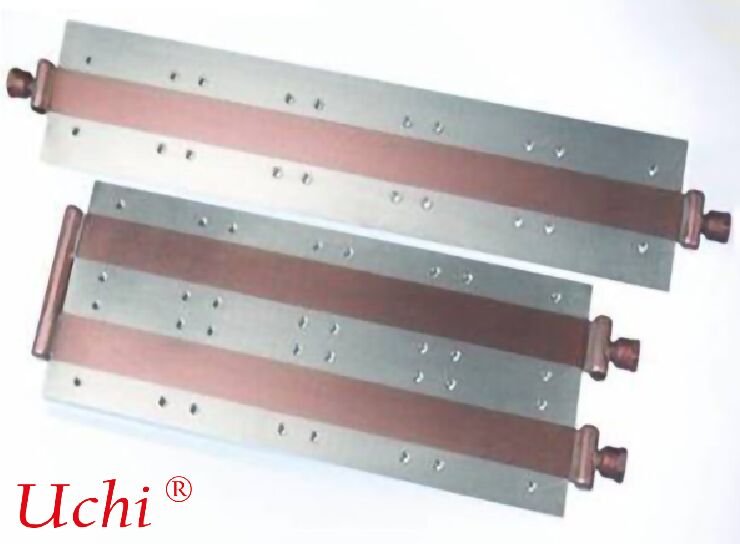
Radiator-Integrated Liquid Cooling Plate
In simple terms: Radiator-Integrated Liquid Cooling Plate = Liquid cooling plate + integrated heat dissipation fins
It attaches to heat-generating devices on one side and features dense fins on the other. Heat is transferred to the fin area via coolant circulation, forming a compact, all-in-one liquid cooling solution.
I. Structural Features
Bonding Surface (Cold Plate Side)
Flat surface that directly attaches to IGBTs, power modules, batteries, motors and other heat-generating components.
Fin Heat Dissipation Side (Radiator Side)
Internal flow channels extend into the dense fin region, forming a structure similar to a radiator.
As coolant flows through, heat is carried to the fins and dissipated via air cooling or natural convection.
Fully Integrated Structure
Mostly manufactured as one piece through skiving, die-casting or brazing,
eliminating the complex assembly of separate radiators and water tubes.
II. Working Principle
- Heat from components → conducts to the liquid cooling plate base
- Coolant flows through internal channels and absorbs heat
- Heated coolant flows into the finned radiator section
- Fins release heat into the environment via fans or natural airflow
- Cooled coolant circulates back to repeat the process
It is a hybrid solution combining liquid cooling heat transfer and air cooling final dissipation.
III. Core Advantages
-
Compact structure & high integrationAll-in-one design saves space, reduces connectors and leakage points.
-
Simple installationDirectly mounted to components; only an external pump and reservoir are needed, no extra radiator required.
-
Uniform heat dissipationExcellent temperature uniformity on the base plate, avoiding local hotspots.
-
High reliabilityBrazed or skived structure provides strong vibration resistance, ideal for automotive and industrial control applications.
IV. Common Manufacturing Processes
-
Skived Radiator-Integrated Liquid Cooling PlateFins and flow channels machined from a single aluminum block, offering high strength and continuous thermal conductivity.
-
Vacuum Brazed TypeBase plate and fins joined by brazing, with denser fins and larger heat dissipation area.
-
Integral Die-Casting TypeSuitable for mass production and low cost, widely used in passenger vehicle thermal management.
V. Typical Applications
- New energy vehicles: integrated cooling for motors, ECU, OBC, DC-DC converters
- Energy storage converters (PCS), photovoltaic inverters
- Industrial servo drives, high-power power supplies
- Laser equipment, welding machines, high-frequency power supplies
- Construction machinery, commercial vehicle controller cooling
VI. Difference from Standard Liquid Cooling Plates
- Standard liquid cooling plate: only absorbs and transfers heat; does not dissipate heat directly to the environment.
- Radiator-integrated liquid cooling plate: absorbs heat, circulates internally, and dissipates heat via its own fins, forming a complete compact cooling system.
この製品の詳細を知りたい


