• A Copper Folded Fin Heat Sink Leverages Copper’S Superior Thermal Conductivity
A Copper Folded Fin Heat Sink Leverages Copper’S Superior Thermal Conductivity

A Copper Folded Fin Heat Sink Leverages Copper’S Superior Thermal Conductivity

商品の詳細:

起源の場所: 中国広東省東莞市
ブランド名: Uchi
証明: SMC
モデル番号: ヒートシンク

お支払配送条件:

最小注文数量: 100個
価格: 1300-1500 dollars
受渡し時間: 制限されていません
支払条件: T/T、ペイパル、ウェスタンユニオン、マネーグラム
供給の能力: 50000000個/月
ベストプライス 連絡先

詳細情報

材料: サイズ: 15*2.8*0.3センチメートル
重さ: 0.09kg テクノロジー: スタンピングフィン
特徴: 柔軟で調整可能 表面処理: 不動態化
熱冷却力: 45W
ハイライト:

copper folded fin heat sink

,

liquid cooling plate with warranty

,

high thermal conductivity heat sink

製品の説明

Copper Folded Fin Heat Sink for Various Shapes

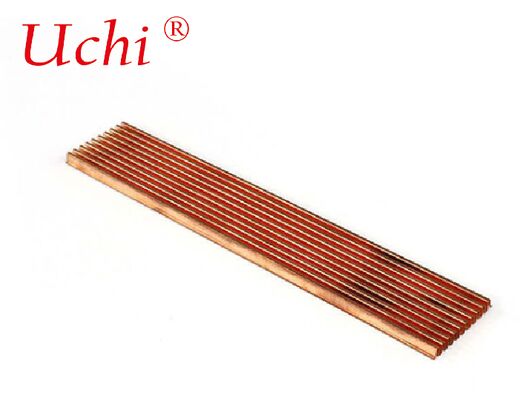
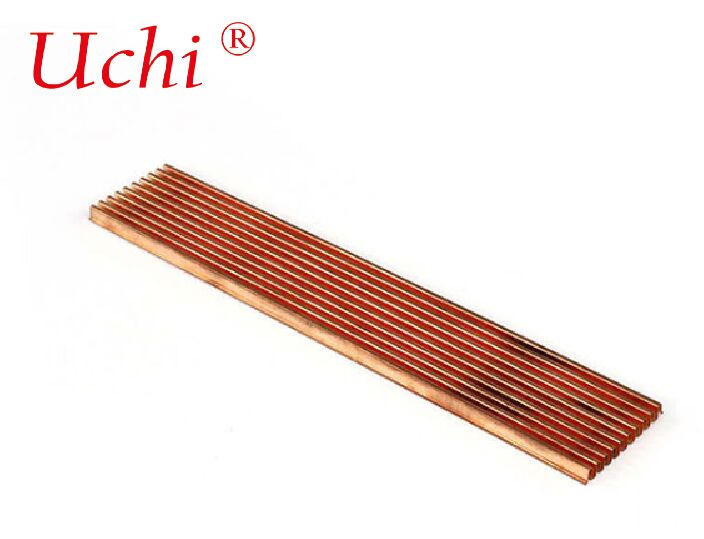
Material: copperSize:15*2.8*0.3CMWeight: 0.09 kgTechnology: Stamping finFeature: Flexiable and ajustableSurface treatment: PassivationHeat cooling power: 45WYou can rest assured to buy Copper Folded Fin Heat Sink for Various Shapes from our factory and we will offer you the best after-sale service and timely delivery.

Product parameters of Customized Copper Folded Fin Heat sink for various shapes

Material: copper

Size:15*2.8*0.3CM

Weight: 0.09 kg

Technology: Stamping fin

Feature: Flexiable and ajustable

Surface treatment: Passivation

Heat cooling power: 45W


Product advantage of Customized Copper Folded Fin Heat sink for various shapes

High density fins heat sink Stacked fin heat sink combination heatsink design makes it possible to fabricate large sized densely packed fabfin structures for high power heat sink requirements, unlimited possibilities as to length, width, height, fin thickness and fin spacing, swaged process allows a multitude of aluminum fins are mechanically attached to dual aluminum baseplates at the same time without using any adhesive. The concept of increasing fin efficiency by sharing fins between two baseplates originated in the one piece hollow extrusion. The standard available line of shapes extends almost every .25" in height from 1.00" to 8.00" high at fin spacing of about 0.10",and high aspect ratios could reach 50:1


Therefore,High density stacked bonded extrusion heatsink will be smart choice.


A Copper Folded Fin Heat Sink leverages copper’s superior thermal conductivity (≈401 W/m·K vs aluminum’s 205 W/m·K) and the folded-fin process’s high surface-area density, while being fully customizable into diverse shapes for constrained high-heat applications. Here’s a detailed breakdown of design, shapes, manufacturing, benefits, selection, and comparisons.
 

Manufacturing Process & Materials

 
  1. Material Specifications: Typically pure copper (C11000/C10200, oxygen-free copper for ultra-high conductivity); fin thickness 0.1–0.4 mm, folded into corrugated/zig-zag arrays, then bonded to a copper base via brazing (vacuum/atmospheric), solder reflow, or high-performance thermal epoxy. Base thickness can be independently optimized (3–20 mm common).
  2. Fin & Shape Customization: Fins can be flat-crest, rounded-crest, wavy, lanced-offset, or herringbone; bases can be CNC-machined into complex geometries (holes, cutouts, curves, steps) post-bonding.
  3. Surface Treatments: Nickel plating (corrosion resistance, solderability), black oxide, passivation; avoid anodizing (copper anodization is unstable vs aluminum).

Core Advantages vs Aluminum Folded Fin

 
  • Higher Thermal Conductivity & Heat Spreading: Faster heat transfer from source to fin tips, critical for high-heat-flux (≥100 W/cm²) scenarios.
  • Better Performance at Low Airflow: More effective passive cooling, though forced air still drastically improves efficiency.
  • Durability & Corrosion Resistance (with plating): Suitable for harsh environments (automotive underhood, industrial controls).
  • Drawback: ~3x heavier than aluminum, higher material and processing costs.

Design & Optimization Tips

 
  1. Thermal Load & Airflow: Calculate required thermal resistance (Rθja, Rθjc) and match to CFM/LFM; dense folded fins need ≥100 CFM forced air to avoid airflow stagnation.
  2. Fin Pitch & Height: For forced air, 1.0–2.0 mm pitch balances surface area and pressure drop; taller fins (up to 60 mm) improve convection but add weight.
  3. Bonding Quality: Vacuum brazing > solder > epoxy for thermal contact; poor bonds create hotspots—verify with thermal imaging or Rθ measurement.
  4. Weight Budget: Copper’s density (8.96 g/cm³) requires careful mass control in aerospace/portable devices; consider copper-fin+aluminum-base hybrid designs.
 

Applications

 
Predominantly in high-power electronics: automotive EV inverters, server CPUs/GPUs, 5G base station power amplifiers, industrial IGBT modules, laser diodes, and medical equipment where reliability and thermal performance take priority over cost/weight.
 

Sourcing & Cost Considerations

 
  • MOQ is often 100–500 units for custom shapes; tooling costs rise with complexity (curved/annular > rectangular).
  • Lead time: 4–8 weeks for design, prototyping, and production runs.
  • Cost drivers: material price, fin density, bonding method, plating, and custom machining steps.A Copper Folded Fin Heat Sink Leverages Copper’S Superior Thermal Conductivity 0A Copper Folded Fin Heat Sink Leverages Copper’S Superior Thermal Conductivity 1A Copper Folded Fin Heat Sink Leverages Copper’S Superior Thermal Conductivity 2A Copper Folded Fin Heat Sink Leverages Copper’S Superior Thermal Conductivity 3
 

この製品の詳細を知りたい
に興味があります A Copper Folded Fin Heat Sink Leverages Copper’S Superior Thermal Conductivity タイプ、サイズ、数量、素材などの詳細を送っていただけませんか。
ありがとう!
お返事を待って。